
Digital intake reduces front desk friction, improves patient satisfaction, and influences physician referral patterns in modern physical therapy practices.
Manual clipboard workflows consume staff time and introduce data errors, contributing to claim denials and revenue loss.
Digital check-in, insurance verification, and automated reporting strengthen referral relationships and improve operational efficiency in outpatient therapy clinics.
Clinical outcomes still matter in physical therapy. But they are no longer the only factor that protects your referral base.
Today, the digital patient experience in physical therapy directly impacts referral volume, patient retention, and operational efficiency. Referring physicians are paying attention to how easy it is to send patients to your practice, how quickly they receive updates, and how smooth the administrative process feels.
When friction builds at the front desk, referrals quietly shift elsewhere. That’s why modern practices are rethinking how that entry point is structured.
Referrals are an extension of a physician’s reputation. When they send a patient to a physical therapy practice, they are trusting that the experience will reflect well on their own organization.
If a patient spends 30 to 40 minutes filling out repetitive paper forms in a crowded waiting room, that frustration often reflects back on the referring provider.
This is one reason many physicians prefer referring patients to practices that use digital intake and automated reporting. Digital workflows create:
For high-volume primary care or surgical practices, efficiency matters. If one PT clinic relies on phone calls, faxes, and manual coordination while another offers digital intake and structured reporting, the second practice becomes the easier choice.
Over time, that convenience can translate into steady growth in referrals.
The first minute of a visit shapes the entire perception of care.
Traditional check-in usually involves the use of clipboards and handwritten medication lists, and repeats demographic information patients have already provided. That process can create frustration before treatment even begins.
Digital patient check-in changes the experience. Patients can complete intake forms on their own device before arriving or use a front desk kiosk that connects directly with the practice management system.
This shift improves both satisfaction and loyalty in several practical ways:
In many outpatient therapy clinics, high Net Promoter Scores are influenced as much by convenience as by clinical outcomes. When the administrative experience is smooth, patients are more likely to recommend the practice and return for future care.
Many practices still rely on the traditional “clip-and-scribe” workflow: a patient fills out a paper form, and a staff member later enters the information into the electronic medical record (EMR).
This approach creates several hidden costs.
If a front-desk team member spends 15 minutes per new patient entering data, the time adds up quickly. In a practice seeing 40 new patients per week, that can translate into thousands of dollars per year in labor dedicated solely to documentation.
The bigger risk is data quality. Small errors in insurance IDs or demographic details lead to denied claims and delayed reimbursement. Change Healthcare reports that hospitals may lose roughly $4.9 million in revenue each year due to incorrect patient data.
Digital intake solutions reduce the need for manual entry at the front desk. Instead of handling paperwork, staff can focus on patient communication, scheduling, and other higher-value responsibilities.
Many clinics now use front desk kiosks that guide patients through intake and offer optional virtual assistant support. This approach improves the digital patient experience in PT practices while protecting revenue and reducing administrative workload.
Boutique rehabilitation centers often stand out because of speed, polish, and convenience. The good news is that traditional practices can compete without redesigning their entire space.
The real shift is operational.
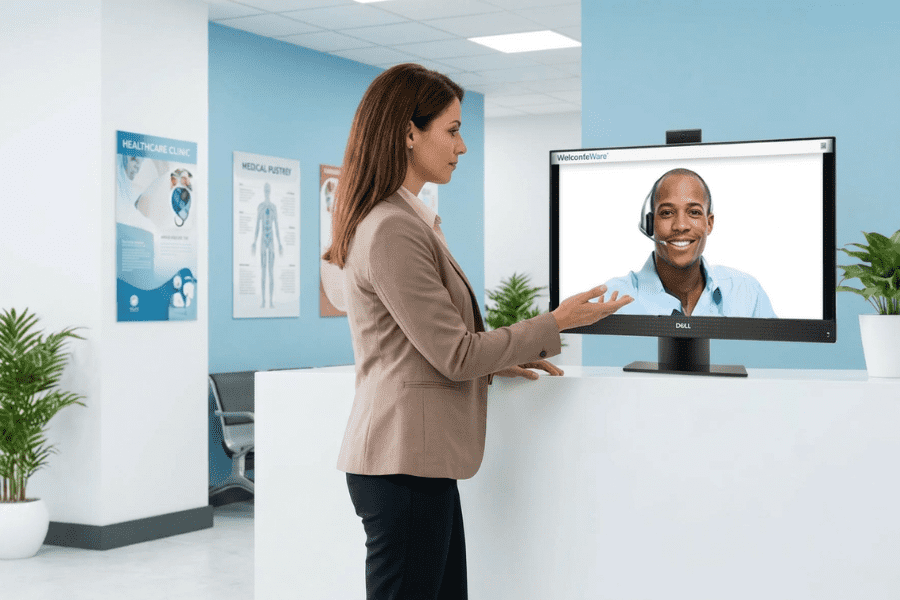
A front desk kiosk, supported by integrated virtual front desk software, can serve as the central engine of a modern intake workflow. It replaces paper-based processes, reduces manual data entry, and creates a consistent, professional check-in experience.
Here’s how a kiosk-centered model helps close the experience gap between traditional physical therapy practices and high-tech boutique rehabilitation centers:
The kiosk combines digital intake and in-office check-in into one system. Patients enter their information once, and the completed forms are captured digitally. Staff can then upload the forms into the EMR as needed, eliminating paper handling and reducing the need for manual data entry at the front desk.
Integrated verification tools confirm coverage before or at check-in. This reduces last-minute surprises and lowers the risk of cancellation.
Structured documentation makes it easier to generate clear progress updates for referring physicians. Ultimately, that strengthens referral relationships.
Kiosks can operate independently or with live virtual assistant support. This allows practices to maintain a professional front desk presence while reducing on-site staffing strain.
Operational speed and clarity matter more than décor. A well-implemented kiosk system does more than modernize the waiting room. It strengthens the digital patient experience in PT practices and supports referral growth.
Operational strength starts at the point of entry. When intake, insurance verification, and check-in are handled through an integrated digital system, the entire practice runs more smoothly. Errors decrease, staff can focus their time where it matters most, and patients move through each step with less confusion and fewer delays.
Many practices now begin the intake process before the patient even arrives. With at-home digital intake tools like “WelcomeForms”, patients receive a secure link to complete their paperwork on their own device before the first visit. This allows time-consuming evaluations and demographic forms to be completed in advance, reducing waiting-room paperwork and minimizing the need for staff to manually enter information into the EMR.
A front desk kiosk like WelcomeWare then serves as the in-clinic extension of that workflow. Patients who partially completed forms at home can quickly finish them at the kiosk or through a QR code on their own device. The kiosk standardizes how patients enter the practice and reduces the variability that often disrupts front-desk operations.
For practice owners, the benefits are practical. Less manual data entry. Fewer front-desk bottlenecks. More accurate documentation. A professional, modern first impression for every patient.



