
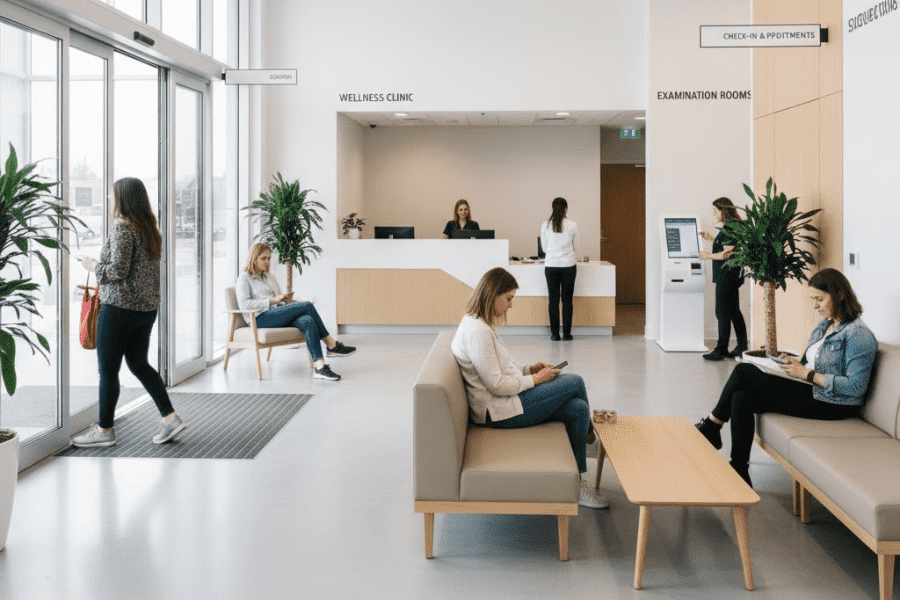
First impressions form before check-in, shifting focus to parking, signage, greetings, wait communication, and process clarity as clinical factors outcomes.
A 2025 study shows smiling and nonverbal cues predict patient comfort and communication quality, while unclear waits intensify perceived delays.
Clear signage, intuitive layouts, proactive wait updates, and brief orientation statements reduce uncertainty, build trust, and improve engagement early visits.
First impressions don’t start at the front desk. They begin in the parking lot, at the entrance, in your signage, and in how patients are greeted, how long someone waits without explanation and whether they directly understand what to do next.
By the time a patient reaches the treatment table, they’ve already formed opinions about your practice. Those judgments are not based on clinical outcomes or credentials, but on how those first few minutes felt.
First impressions at a medical clinic take shape before anyone asks about pain levels or range of motion. From the moment patients park, open your door, and look around the lobby, they’re quietly evaluating competence. These early judgments are subtle and often subconscious, but they directly influence trust, engagement, and whether someone feels comfortable continuing care.
This post breaks down what patients actually notice in those first 60 seconds, from signage and greetings to wait times and process clarity, and invites you to see your clinic through a first-time visitor’s eyes.
The patient experience begins well before anyone says hello.
By the time patients arrive, many are already carrying stress from traffic delays, physical discomfort, insurance questions, and uncertainty about what comes next. The exterior of your clinic either eases that tension or increases it.
From the parking lot to the lobby door, patients are subconsciously looking for helpful cues such as clear signage, an obvious entrance, and a logical path forward. They’re asking themselves simple questions:
When practice names are hard to spot, doors aren’t clearly marked, or directional cues are missing, patients hesitate. That moment of uncertainty becomes the emotional baseline they bring inside to your practice.
This isn’t about visual polish. It’s about orientation. When patients can confidently move from arrival to check-in without stopping to recalibrate, they start their visit feeling steadier, more receptive, and more trusting before your front desk even comes into play.
Ask patients the top three things they notice when entering a clinic lobby, and the answers are rarely about design details. They’re usually about practical things like:
Not wall art. Not flooring.
Patients are looking for immediate clarity. Within seconds, they’re trying to direct themselves to the space and the process. They look for a visible check-in point, purposeful seating, and simple instructions that don’t require guesswork.
When those cues aren’t obvious, most patients don’t ask for help. They pause, watch others, or wait quietly to be acknowledged. That moment of uncertainty creates friction before care even begins.
Clear signage, intuitive layouts, and an obvious flow through the lobby reduce stress. The goal is simple: a first-time visitor should be able to understand what to do without stopping or hesitating.
The front desk interaction carries more weight than most practices realize.
Research shows that nonverbal behaviors such as eye contact, facial expressions, and posture influence how patients experience clinical interactions. A 2025 study found that medical students’ use of smiling significantly predicted patients’ comfort level and perceived communication quality, suggesting that simple nonverbal cues can help people feel more at ease and understood during healthcare encounters.
These small but impactful nonverbal cues communicate organization, attentiveness, and care, well before any clinical conversation forms.
A warm greeting doesn’t have to require a script. It requires presence, acknowledgment, and care. Small behaviors shape perception: offering a simple “I’ll be right with you,” standing to greet instead of speaking while seated, or pausing mid-task to make eye contact. None of these takes much time, but together they establish tone.
Patients rarely remember the exact words spoken. They remember whether they felt seen or heard.
When the front desk feels rushed or distracted, patients often perceive it as disorganization, even when clinical care is excellent. That early impression does influence how they experience the rest of the visit.
Most practices focus on reducing actual wait time. But perceived wait time carries just as much weight.
Patients experience delays very differently, depending on whether they understand what’s happening. Sitting in silence feels longer than waiting with context, as uncertainty amplifies frustration and stress.
This is where communication, not just efficiency, makes the difference and leaves a lasting impression on clients.
Replacing silence with clarity and guidance changes the overall experience. Thoughtful use of screens, guided check-in flows, or simple digital instructions can help patients understand where they are in the process. When people can see which step they’re on or receive brief updates, anxiety decreases significantly, and patience increases.
That’s why many practices explore digital signage and kiosks to reduce perceived wait times. Not because technology replaces human interaction, but because information reduces uncertainty.
Patients subconsciously connect their surroundings to your competence.
They notice the cleanliness of floors and furniture. They register noise levels, lighting, clutter, and even smell. These details don’t stand out individually, but together they shape how safe, organized, and professional your practice feels.
This is the real impact of clinic interior design on patient trust in 2026. Not luxury, but order.
A calm, organized space signals control. It tells patients their care will be handled with the same attention as the environment around them.
In contrast, crowded counters, overflowing paperwork, or chaotic waiting areas send a very different message. Even when clinical outcomes are strong, a visual disorder can introduce doubt.
Your environment quietly answers a question every patient carries with them: “Is this place intentional or reactive?”
Beyond how a space looks, patients want to understand how their visit will unfold.
They’re wondering practical questions such as:
When these steps aren’t explained, patients carry that uncertainty into treatment.
This is where simple verbal orientation makes a measurable difference. A sentence like “Once you finish this form, we’ll bring you back for your evaluation,” immediately removes guesswork. Without that context, patients sit waiting, mentally tracking possibilities instead of settling into care.
Every unclear step adds avoidable tensions. Over time, that emotional load shapes how patients arrive clinically: guarded, distracted, or already fatigued before the appointment truly begins.
One of the most useful exercises for practice owners is also one of the simplest.
Walk in unannounced. Follow the patient path. Sit in the waiting area. Listen to how the staff greet people. Notice where you hesitate or feel unsure as you move through the space. Then ask yourself:
You’ll notice things you’ve stopped seeing.
Small delays. Unclear signage. Awkward transitions. Moments where no one quite owns the experience. These details often fade into the background during busy days, but they shape a patient’s first impression.
Seeing your clinic through fresh eyes surfaces friction that dashboards and metrics never reveal.
Meaningful improvements don’t require full renovations or major changes.
They often show up in small, repeatable behaviors: standardized greetings, clear entry signage, a defined intake flow, proactive communication about wait times, front desk posture and presence training, and regular environmental resets throughout the day.
Individually, these changes seem minor. Collectively, they reshape the patient experience.
These aren’t cosmetic updates. They influence retention, referrals, and follow-through with care. More importantly, they determine whether patients feel steady enough—physically and emotionally to engage in treatment.
First impressions don’t just affect satisfaction. They shape whether patients feel safe enough to commit.
Arrival isn’t separate from treatment.
Those first moments establish emotional safety, operational confidence, and trust, long before any hands-on care begins.
When patients feel oriented, acknowledged, and informed, they become more receptive. When they don’t, even excellent therapy has to work uphill.
This is where tools like a WelcomeWare kiosk can play a meaningful role. A kiosk helps reduce uncertainty by guiding patients clearly through check-in, forms, and next steps, so they never feel stuck or hesitant. Built to support your workflow, it ensures basic needs are met right away
Paired with that, Welcomers — trained virtual front-desk assistants — bring a live human presence to every interaction, offering a warm greeting, answering questions, and helping patients feel seen and supported from the moment they walk in.
Together, the WelcomeWare kiosk and Welcomers create a balanced experience: clear guidance and efficient process support, plus human connection. That combination reduces stress, enhances satisfaction, and sets the tone for care long before the first clinical touch.
Practice owners who treat the entry experience as part of clinical delivery don’t just improve satisfaction; they also improve outcomes. They create steadier patients, clearer expectations, and stronger relationships from the very first step inside.


