
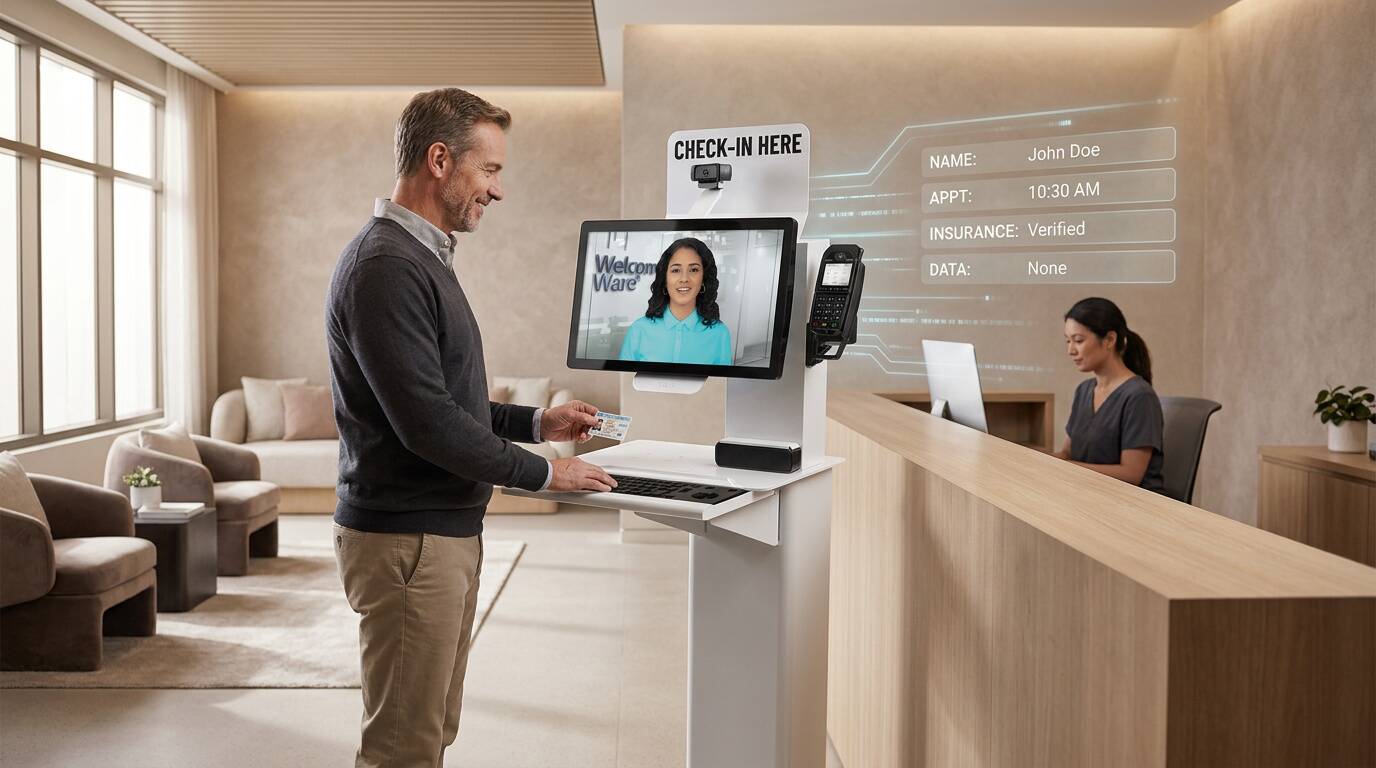
The Trust Deficit: In the debate of AI vs. human medical virtual assistants, patients routinely exhibit greater trust in humans, prioritizing psychological needs for recognition that algorithms cannot satisfy.
Cognitive Resilience: Unlike AI, human medical virtual assistants provide empathetic, adaptable decision-making informed by intuition, preventing the "transactional fatigue" that drives patient churn.
Crisis Management: Dedicated human professionals, such as WelcomeWare Welcomers, address subtle clinical red flags that algorithms miss, ensuring patient well-being during complex escalations.
The core distinction between AI and human medical virtual assistants lies in the shift from functional automation to relational intelligence. AI assistants are auxiliary tools designed to perform objective, rules-based tasks, such as data retrieval or automated appointment reminders. While they offer speed, they are fundamentally devoid of the situational awareness required to navigate the nuances of a busy medical office arrival.
Human medical virtual assistants—specifically WelcomeWare’s Welcomers—are trained administrative professionals who support both front-desk and back-office operations. They provide a dependable presence that AI cannot replicate, using experience and intuition to navigate complex patient needs.
The "empathy gap" refers to the inability of automated systems to provide emotional support during critical patient touchpoints. A 2024 research from The Beryl Institute, human connection and clear communication remain the top concerns for patients worldwide. When a patient arrives at a clinic feeling anxious or overwhelmed, an AI follows a protocol; a human professional provides presence.
This distinction is critical for financial sustainability because technology, when left unmonitored, often creates operational fragmentation. According to PwC, this sense of a "broken" or disconnected journey is a primary pain point for patients. A Welcomer (a human virtual assistant) directly bridges this gap. By facilitating the check-in through a high-definition kiosk, they serve as the "connective tissue" that ensures the digital process feels like a continuous, human-centric ecosystem. This "warm" arrival ensures the patient feels recognized rather than processed, transforming a potentially fragmented digital interaction into a cohesive experience that builds long-term loyalty and protects patient lifetime value (LTV).
In an era where the majority of patients already find it difficult to navigate care systems, a poor arrival experience doesn't just end a visit; it severs a long-term relationship, leading to significant losses in patient lifetime value (LTV).
While AI can reduce administrative labor, some workflow automation systems, such as those handling scheduling or patient triage, can introduce small gaps that require human oversight. These moments are not failures but opportunities for human medical assistants to step in, ensuring smooth operations and preventing “Click Fatigue.” In this way, humans complement AI, providing the adaptability and judgment that automation alone cannot replicate.
A human virtual assistant serves as a sophisticated filter during the arrival and registration process:
| Feature | AI Virtual Assistants | Human Medical VMAs (Welcomers) |
|---|---|---|
| Primary Goal | Functional Task Execution | Relational & Operational Support |
| Decision Making | Rules-based/Algorithmic | Intuition & Experience-informed |
| Arrival Experience | Transactional (Forms only) | Relational (Visual & Verbal) |
| Workflow Role | Auxiliary/Assistive tool | Embedded Team Member |
| Accountability | Black-box Algorithm | Managed Administrative Professional |
When comparing AI and human medical virtual assistants, a critical differentiator is the ability to recognize non-scripted operational red flags. While AI processes data based on specific inputs, it lacks the situational awareness to detect when a patient’s physical demeanor suggests they are in distress.
While Welcomers are administrative—not clinical—professionals, their presence via high-definition kiosks—such as the WelcomeWare—provides a vital layer of observational awareness. While an algorithm may only "see" a completed form, a human medical virtual assistant can observe subtle signs of physical or respiratory distress during the check-in process. Their role is to facilitate a "frictionless" arrival while acting as a vigilant fail-safe, knowing exactly when to alert on-site clinical staff to a patient’s immediate needs.
To maintain the highest standard of patient care while embracing technology, healthcare organizations should follow these ground-truth principles:
The most effective way to bridge the gap between digital efficiency and human empathy is with WelcomeWare, the leading virtual front-desk kiosk and staffing solution. The platform combines a kiosk, software, virtual receptionists, and actionable data to support a smooth, frictionless check-in process.
By choosing WelcomeWare, healthcare practices ensure consistent front desk and registration coverage, increase scheduled-outs and collections, and reduce operating costs while creating a positive patient experience. This approach delivers a "seamless patient arrival experience" without sacrificing the human oversight essential to operational safety and long-term patient loyalty.


