
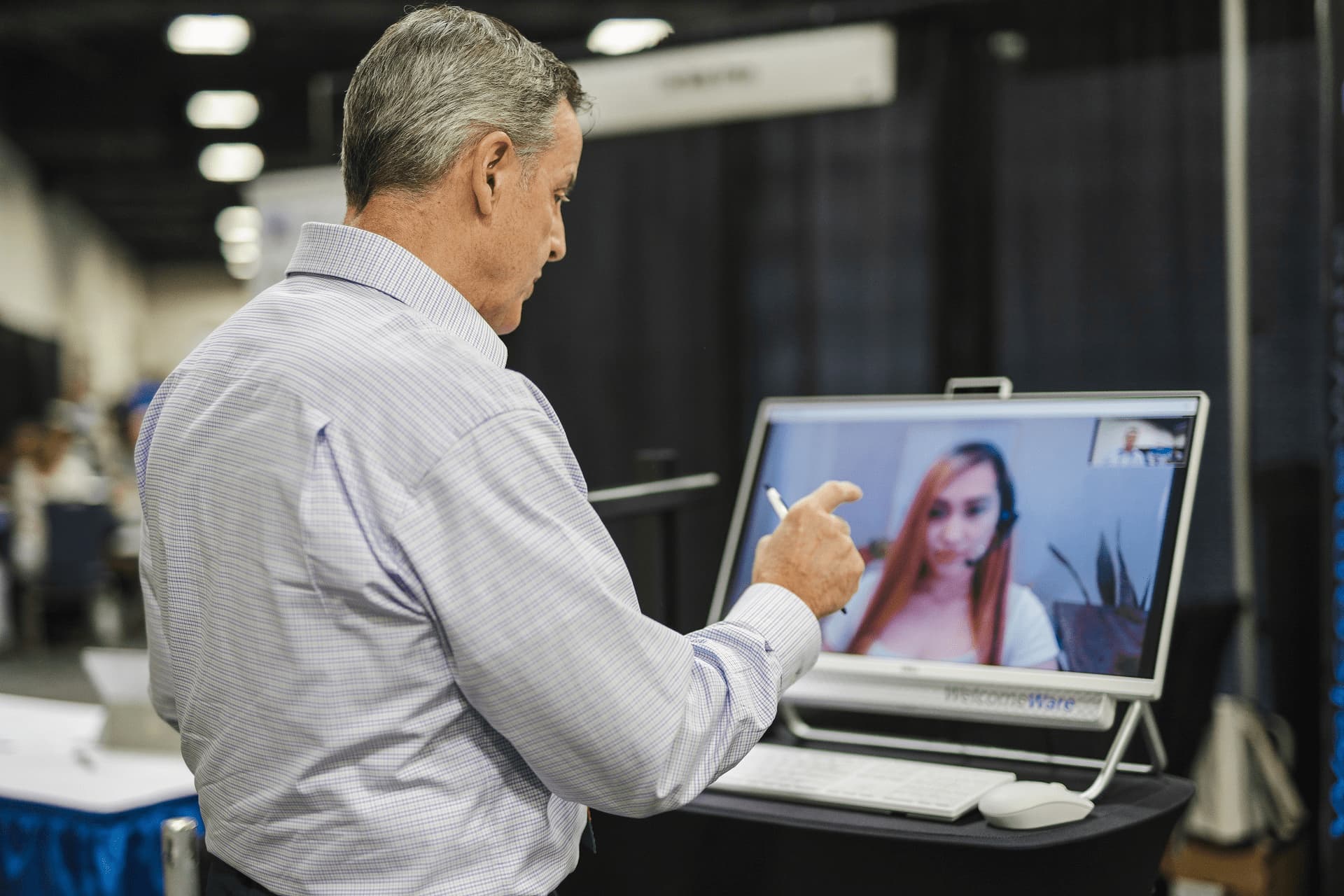
Hybrid virtual reception blends human interaction with remote scalability, reducing staffing gaps while preserving patient trust and operational continuity.
Competitive healthcare labor market pressures front-desk hiring, making remote talent pools critical for stabilizing coverage and lowering turnover disruption.
One virtual receptionist can support multiple clinics, improving efficiency, maintaining availability, and protecting revenue cycle accuracy across locations.
Physical therapy practice owners often face a difficult choice between the warmth of in-person staffing and the speed of automated check-in systems. While a friendly greeting improves patient trust, the high turnover and rising labor costs of traditional medical receptionists create significant operational friction. Conversely, self-service kiosks offer efficiency but lack the empathy required for patients who are in pain. A hybrid virtual receptionist model offers a solution by combining human connection with remote scalability. This approach allows a clinic to maintain a professional front-desk presence while significantly lowering overhead and stabilizing the workforce.
Both traditional staffing and fully automated kiosks pose risks to a clinic's success. Recognizing these pain points is essential for optimizing your front office.
Front-desk staff manage sick leave and emergencies that can leave the lobby unattended. When a receptionist is unavailable, clinical providers must stop treating patients to answer phones or check in visitors. Furthermore, recent 2025 healthcare data suggests that while turnover is beginning to stabilize, the labor market remains highly competitive for front-line administrative roles.
Patients visiting a physical therapy clinic often experience physical discomfort or frustration. An automated machine cannot provide a sympathetic response or handle nuanced insurance questions. These systems also require frequent technical updates and lack the flexibility to adapt to sudden schedule changes.
Virtual receptionists manage front-desk duties remotely. By using a live streaming platform like WelcomeWare, your practice maintains a live human presence on a virtual receptionist kiosk.
Remote work removes the barriers of travel and physical presence. If a receptionist at one location is busy, a team member from another site can immediately cover. This ensures patients never encounter an empty front desk, which protects your professional reputation.
Virtual platforms use high-definition video to facilitate check-ins. The "face" on the screen is a live person who can engage in friendly conversation. This connection is vital for patient retention and business success.
Practice owners with several locations see an immediate return on investment. One virtual receptionist can manage multiple front desks from a central hub. They can assist a patient at Location A and then immediately stream into a kiosk at Location B. This maximizes productivity and improves the bottom line.
Since the front desk does not need to be physically present, you can hire from a broader candidate pool. This is a significant advantage for clinics in areas with high labor costs or limited skilled talent. Remote work options also lead to higher retention, as they reduce burnout in traditional medical assistant roles.
You do not always need to hire new staff to make this transition. You can train your existing team on remote work protocols. The process requires virtual front desk software that secures HIPAA-compliant data and provides features such as visitor notifications and digital forms.


