
Predictable Fixed Costs Beat Revenue Sharing: Escalating percentage-of-collection fees penalize growing practices—especially under ongoing Medicare reimbursement cuts. Transparent, fixed pricing keeps operating expenses predictable as your clinic scales.
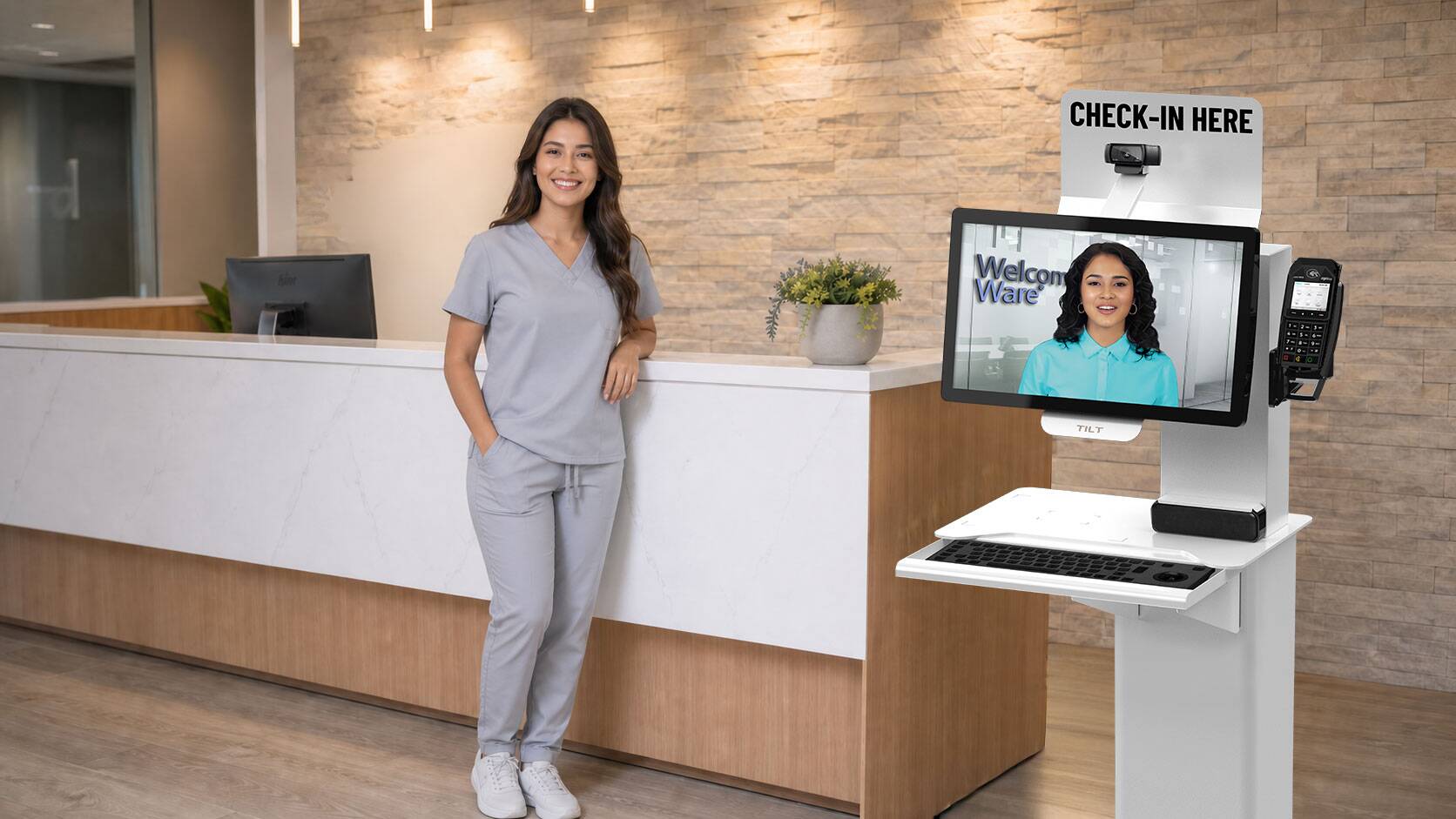
Flexible Staffing Options (Standalone Virtual Assistants vs. Kiosks): Modern platforms allow you to hire dedicated offsite virtual assistants exclusively for back-office and phone coverage, or pair them with interactive lobby kiosks for full front-desk presence.
Dedicated Virtual Staff Drive Consistency: Unlike shared BPO queues, dedicated virtual assistants learn your EMR, clinical culture, and scheduling rules—improving copay collections and care plan adherence.
Changes in clinic ownership, shifting fee structures, or evolving strategic priorities often prompt private physical therapy practices to re-evaluate their administrative outsourcing relationships. If your practice currently relies on traditional administrative support vendors or legacy BPO providers, you may be actively researching an alternative that delivers higher reliability, dedicated front-desk presence, and operational predictability.
Choosing a replacement provider involves far more than comparing basic hourly billing rates. Your administrative partner directly impacts patient scheduling, insurance verification, copay collection, referral tracking, front-desk check-in, and overall care plan adherence.
This guide outlines what physical therapy practice owners should evaluate when selecting a modern administrative support alternative, how to compare service models, and how to execute a seamless transition without disrupting daily clinic operations.
When evaluating administrative support alternatives, practice owners typically compare traditional business process outsourcing (BPO) models with modern, flexible platforms that offer dedicated virtual staffing and optional lobby hardware.
| Operational Feature | Traditional BPO / Shared Agent Pool | Modern Flexible Virtual Staffing |
|---|---|---|
| Pricing Model | Escalating percentage-of-collections or variable fees | Transparent, fixed staffing rates and predictable software and hardware fees |
| Staffing Allocation | Shared agents pooled across multiple non-exclusive clients | Dedicated, full-time virtual assistants assigned exclusively to your practice |
| Deployment Flexibility | Restricted to back-office phone and chat queues | Deploy virtual staff alone for back-office and phone duties, or pair them with lobby kiosks |
| EHR & Workflow Integration | Variable; offsite queues with limited operational visibility | Secure login to your EHR/EMR through company-owned, monitored, and audited devices |
| Patient Experience | Disconnected interactions with changing agents | Familiar, dedicated faces greeting returning patients and handling inquiries |
In physical therapy, consistency and predictability directly impact clinical outcomes. When patients interact with the same administrative team during every visit, trust improves, arrival times tighten, and copay collection rates increase.
Private physical therapy practices operate in a challenging economic climate. In fact, physical therapy reimbursement rates have faced multi-year conversion factor reductions. Paying a third-party vendor a percentage of total practice collections affects growing clinics precisely when operating margins are under pressure.
Furthermore, an APTA workforce study highlighted a national shortage of over 12,000 full-time physical therapists, with 70% of rehabilitation professionals reporting burnout. When front-desk staffing is inconsistent or outsourced to a shared agent pool, clinicians are forced to pick up administrative slack—eating into billable treatment time, worsening physical therapist burnout, and accelerating costly clinician turnover.
Common triggers for switching providers include:
A modern physical therapy administrative solution must meet four non-negotiable operational standards:
Auditing your administrative provider requires mapping out every operational touchpoint—from patient check-in and copay collection to insurance eligibility and plan-of-care tracking—to ensure zero disruption to cash flow or care.
A successful transition relies on a four-phase execution:
Lobby Efficiency Impact: Industry research from Intel Market Research shows that deploying interactive check-in kiosks in outpatient facilities reduces patient wait times by 30% to 40% while dramatically improving front-office data capture and copay collection rates.
WelcomeWare is an administrative solutions provider for healthcare and physical therapy practices. Rather than routing your patient calls to an unassigned support pool, WelcomeWare pairs enterprise lobby hardware with dedicated offsite staff, giving your practice higher reliability and operational predictability.
To explore the broader operational advantages of remote reception, review our guide on why your physical therapy practice needs virtual receptionists.
Use this checklist during consultation calls when evaluating prospective vendors:
Administrative shifts shouldn't interrupt patient care or compromise your bottom line. If you are actively seeking a modern administrative support alternative, explore how WelcomeWare’s flexible virtual staff and interactive kiosks can stabilize your front desk and boost practice efficiency.


